
Lesson Plan: Poetry Analysis
“Idea” by George Kissamitakis
Subject: English Language Arts / Literature / Creative Writing
Level: Intermediate to Advanced (B1–C1 CEFR, Grades 10–12)
Time: 75–90 minutes
Materials: Printed student worksheet, whiteboard/projector, pens/highlighters, optional: audio recording of the poem
Lesson Objectives
By the end of this lesson, students will be able to:
Interpret a contemporary philosophical poem using close reading strategies.
Identify and analyze literary devices (personification, imagery, metaphor).
Trace the structural and emotional arc of a poem across three movements.
Construct a coherent analytical paragraph using textual evidence.
Create a personal creative response inspired by the poem’s themes.
Idea
by George Kissamitakis
We are an idea, elusive in time,
Unrestrained, with will; the flight of a spark.
So small and yet, so daring.
It stares darkness in the face;
I am here!
Nothing can conceal me.
Death a memory, outdated knowledge;
A phantom revealed under the huntress’ light,
A bolt of heartfelt life, and courage that reflects.
Across, hesitantly, the step that carves
The gully, the deep-high, which becomes a gnawing grief.
But once you saw it coming;
Then once you saw it leaving,
Memory…
what memory?
Goodbyes and now is raining…
Lesson Procedure
I. Warm-Up: The Power of an Idea (5–7 minutes)
Think-Pair-Share Prompt: “If you had to describe yourself or humanity as one thing—an object, a force, a concept—what would it be and why?”
Students think individually (1 min), discuss with a partner (2 min), then share with the class.
Teacher bridges to the poem: “Today we’ll explore a poem that defines us all as ‘an idea.’”
II. First Reading & Initial Impressions (10 minutes)
Teacher reads the poem aloud slowly, with feeling. Students listen only.
Students read silently while following on their worksheet.
Quick Reaction: Students complete Part 1 individually.
Brief class share: Teacher asks a few students to share their chosen mood and strongest image. No deep analysis yet—just first impressions.
III. Guided Close Reading (30–35 minutes)
Teacher guides students through Part 2 section by section. Use a mix of individual work, pair discussion, and whole-class review.
A. Personification (5–7 min)
Students find actions (flight, stares, conceals, reveals, carves).
Discuss: What personality does this give the “idea”? (Brave, defiant, vulnerable, conscious.)
Board: Create a collective character profile.
B. The Three-Act Journey (15 min)
Act 1 (Announcement): Focus on pronoun shift from We → I. Why? (Individual consciousness awakening from collective idea.)
Act 2 (Action & Cost):
Clarify “huntress’ light” = Artemis/moonlight = revealing truth.
The “step” = life choices, commitment, love, risk.
“Gully” → “gnawing grief” = consequence, lasting emotional marks.
Act 3 (Fade & Aftermath):
Who is “you”? (Possible: reader, past self, observer.)
Discuss broken “Memory…” lines (fragmentation, loss).
Grammar break in last line: poet breaks rules to show emotion overwhelming syntax.
C. Vocabulary in Context (5 min)
Review definitions.
Students write short answers, then share:
Elusive in time = cannot be held still; life is fleeting.
Gnawing grief = sorrow that eats at you slowly.
Huntress’ light = reveals hidden truths (like moonlight shows what darkness hid).
IV. Synthesis: Writing the Analysis Paragraph (10 minutes)
Students work individually on Part 3, using notes from Part 2.
Teacher provides sentence starters on board if needed:
“The poet claims that human existence is…”; “First, the idea…”; “For example, the image of…”Optional: Ask a confident student to share their paragraph aloud as a model.
V. Creative Response & Reflection (15 minutes)
Students choose Option 1 (Write Your Own “I Am” Metaphor) or Option 2 (Interview the Poet).
Option 1: Encourage bold metaphors (I am a bridge, I am a wound, I am a seed).
Option 2: Partner exchange—answer as the poet. This builds empathy and interpretive thinking.
Reflection (Part 5): Students complete individually—valuable feedback for teacher.
VI. Wrap-Up & Exit Ticket (5 minutes)
Class Discussion Question: “Do you agree with the poet that ‘we are an idea’? Why or why not?”
Exit Ticket: “Write one thing you learned today about how poets use structure to tell an emotional story.”
Collect worksheets or assign completion as homework.
Differentiation & Scaffolding
Support:
Provide a glossary with additional words (phantom, heartfelt, hesitantly).
Pre-highlight key lines in the poem for attention.
Offer a partially completed analysis paragraph frame.
Extension:
Challenge students to find a connection between this poem and a historical figure or modern issue.
Assign a comparison with another poem on identity (e.g., Walt Whitman’s “Song of Myself” excerpt).
Research Artemis in mythology and explain her relevance to the poem’s meaning.
Assessment
Formative: Participation in discussions, quality of close-reading notes (Part 2).
Summative: Completed analysis paragraph (Part 3) and creative response (Part 4).
Rubric Focus: Use of textual evidence, coherence of interpretation, creativity, and personal engagement.
Homework / Follow-Up
Revise your analysis paragraph into a mini-essay (200–250 words).
Find a song or film scene that explores a similar theme (the pain and beauty of existence) and prepare a 2-minute explanation for the next class.
Visit the poet’s website (www.kissamitakis.com) and read another poem. Note one similarity and one difference with “Idea.”
Teacher’s Notes
Key Theme: Identity as a transient, courageous, and painful construct.
Potential Sticking Points:
Abstract nature of “idea.” Use analogies: an idea is like a seed, a flame, a story.
The shift to mythological imagery (huntress). Briefly explain Artemis as a symbol of revealing truth.
The non-standard grammar in the final line—frame it as an artistic choice to convey overwhelming emotion.
Why This Poem Works: It’s short, dense, and richly layered—accessible yet deep, perfect for building analytical confidence.
“Poetry is the art of uniting pleasure with truth.”
Samuel Johnson

The Plastic Problem in Supermarkets: Time for Change
The Plastic Problem in Supermarkets Time for Change Introduction Walk into any supermarket, and you’ll see shelves full of food wrapped in plastic. From bananas in plastic bags to meat
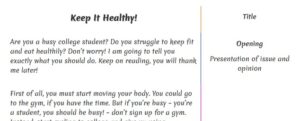
The Structure of Articles – B2 First
The Structure of Articles Cambridge B2 First (FCE) The Structure of Articles Purpose of an article The goal of an article is usually to talk about a topic you like

Board Game Templates
Board Game Templates Free printable board games Free Blank Board Games You Can Print and Play With In No Time Download Board Games Tenses review board game – Roll a